Did you know that over 48% of Johannesburg's water is lost to leaks and bursts before it ever reaches a consumer? When you suspect a water leak under floor Johannesburg conditions often make the situation feel urgent, especially with Level 2 water restrictions currently in place across the city. It is natural to feel anxious as your municipal bill climbs while you worry that your home's foundation is at risk of structural damage.
You likely fear that finding the source will require tearing up your tiles and floorboards, but modern technology has changed the process entirely. We believe that precision leak detection should be a surgical procedure rather than a demolition project. This guide explains how to identify and locate hidden under-floor leaks without unnecessary property damage. You'll learn about non-invasive detection methods, how to protect your flooring, and why you must insist on a professional repair that includes a Plumbing COC.
Key Takeaways
- Identify the subtle early warning signs of sub-surface leaks to prevent the structural foundation damage common in Gauteng's expansive clay soils.
- Explore how advanced non-invasive technology pinpoints a water leak under floor Johannesburg properties might experience, ensuring repairs are surgical rather than destructive.
- Understand the critical difference between a localized spot repair and pipe rerouting to choose the most durable solution for your home's plumbing.
- Learn how to implement long-term protection, such as pressure-reducing valves, to safeguard your pipes against the city's frequent supply fluctuations.
- Discover why insisting on a Plumbing COC for all under-floor repairs is essential for insurance compliance and personal peace of mind.
Identifying a Water Leak Under the Floor in Johannesburg
A sub-surface or under-floor leak occurs when a pressurised water pipe, buried beneath your home's concrete slab or foundation, develops a hole or crack. Unlike a dripping tap, these leaks are hidden from view. In our local environment, we refer to this as the "Silent Thief." Johannesburg is built on expansive clay soils that swell and shrink with the seasons. When a water leak under floor Johannesburg properties occurs, it saturates the soil beneath the slab. This causes the foundation to shift unevenly, leading to structural cracks that are far more expensive to fix than the plumbing itself.
It is vital to distinguish between different types of moisture. Rising damp usually creeps up walls slowly from the ground level. Groundwater might appear after heavy Gauteng summer storms but eventually subsides. A pressurised pipe leak is relentless. It flows 24 hours a day, regardless of the weather. If you suspect a leak, your first step is to remain calm. Locate your main internal stopcock and shut it off. This limits immediate damage whilst you arrange for professional leak detection methods to pinpoint the exact failure point.
The 5 Telltale Signs of a Hidden Floor Leak
Your home often "talks" to you before a disaster strikes. Look for these specific indicators:
- Unexplained Bill Spikes: A sudden increase in your Joburg Water account without a change in household habits is the most common red flag.
- Warm Floor Areas: If you feel a hot spot on your kitchen or bathroom tiles, it usually indicates a burst hot water line beneath the surface.
- The Hissing Sound: In a quiet house, you might hear a faint sound of running water or hissing behind walls or under floors when no taps are open.
- Grout and Wood Changes: Keep an eye out for damp or darkened grout lines. Wooden floorboards may begin "cupping," where the edges of the planks rise higher than the centre.
- Foundation Cracks: New, large cracks in your floor or where the floor meets the wall suggest soil movement caused by water saturation.
The 2-Minute Meter Test: A Step-by-Step Guide
This simple test confirms if you have a leak before you call for assistance. Follow these steps for an accurate result:
- Find the Meter: Locate your municipal meter, which is typically found near your property boundary in a plastic or concrete box.
- Clear the Dial: Wipe away any sand or water from the glass. Note the position of the small red dial or the digital digits.
- Isolate Your Home: Turn off all taps and ensure no appliances like washing machines or dishwashers are running. If you have a jojo tank or irrigation system, shut those valves off too.
- Observe the Movement: If the dial continues to spin or the digital numbers increase whilst everything is off, you have a leak. A fast-spinning dial indicates a major burst, whilst a slow "tick" suggests a pinhole leak that still requires urgent attention.
Advanced Non-Invasive Leak Detection Technology
The traditional method of finding a water leak under floor Johannesburg homes often involved destructive trial and error. Plumbers would break through tiles and concrete based on a "best guess," leaving homeowners in Sandton or Bryanston with significant restoration costs. We reject this approach. Modern detection is a surgical process where the goal is to pinpoint the pipe failure to within the area of a single floor tile. By utilising specialised sensors, we reduce the "make-good" costs that typically follow a plumbing emergency.
Professionalism in this field requires more than just tools. It involves technical accountability. Most South African insurers will only honour claims for "trace and access" if the work is performed by a PIRB-registered professional. This ensures that the diagnostic report meets industry standards for accuracy and compliance. Ongoing advanced leak detection research continues to refine these tools, allowing us to find even the smallest drips before they undermine your foundation.
Acoustic Sonic Leak Detection
When water escapes a pipe under pressure, it generates a specific sound frequency. Acoustic detection uses sensitive ground microphones to pick up these vibrations through layers of concrete and screed. These systems are highly effective for copper and HDPE pipes. High-quality equipment allows us to filter out the ambient Johannesburg street noise, such as passing traffic, to focus solely on the "hiss" of the escaping water. This method is exceptionally reliable for detecting a water leak under floor Johannesburg residents might hear but cannot see.
Thermal Imaging and Infrared Surveys
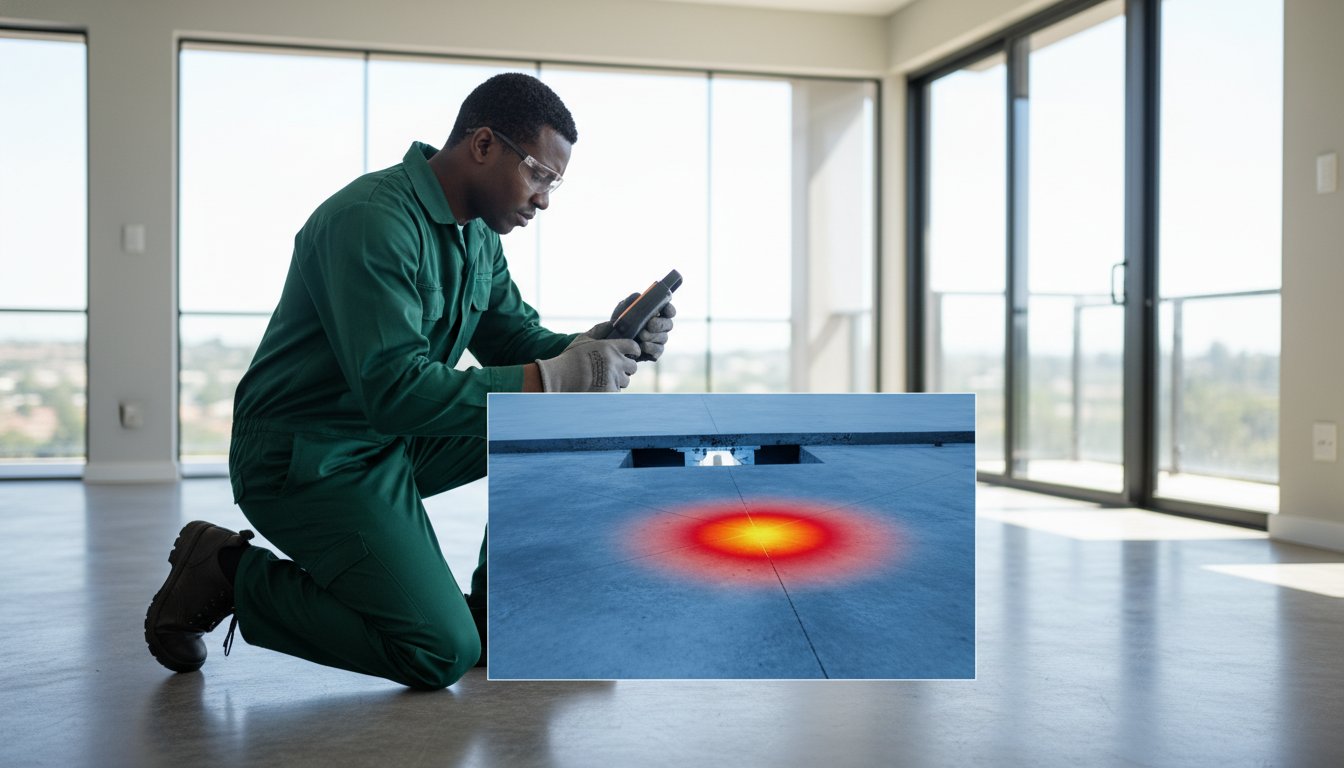
Thermal cameras allow us to see what the naked eye cannot. By visualising temperature variations on the floor's surface, we can map the exact path of hot water lines buried beneath. A leak typically appears as a "bloom" or a distorted heat signature where the hot water has saturated the surrounding sub-floor. These cameras see through various floor finishes without direct contact, making them an essential tool for rapid diagnostics. If you are worried about rising damp or heat loss, our professional leak detection service can provide immediate answers.
Tracer Gas Detection
Some leaks are too small for sound or heat signatures to detect. In these cases, we use tracer gas, which is a safe mixture of hydrogen and nitrogen. We drain the water from the suspected line and introduce the gas under pressure. Because hydrogen molecules are incredibly small, they escape through the pinhole leak and rise through the floor. We then use a "sniffer" probe to detect the gas as it exits, providing a definitive location for the repair. This is the gold standard for identifying tiny failures in complex plumbing systems.

Why Johannesburg Homes are Prone to Under-Floor Leaks
Johannesburg's geography presents unique challenges for residential plumbing. Unlike coastal regions with sandy soil, much of Gauteng is dominated by expansive clay. This material behaves like a sponge; it swells significantly during our heavy summer rains and contracts sharply during the dry winter months. This constant movement puts immense physical stress on rigid pipes buried beneath your home. When a water leak under floor Johannesburg home occurs, it's frequently the direct result of this geological shifting. The soil literally pulls the plumbing apart at its weakest points.
In established suburbs such as Bryanston and Rivonia, many homes still rely on the original copper piping installed decades ago. These legacy systems were often laid directly into the soil or concrete without modern protective sleeves or lagging. Over time, the combination of soil movement and chemical reactions leads to joint failure. Additionally, the city's aging municipal infrastructure frequently experiences supply interruptions. When water is restored, the resulting pressure surges act like a hammer blow to weakened household junctions. This is exacerbated by the fact that in the 2023/24 financial year, Johannesburg Water replaced only 17km of its 12,364km water pipe network. Understanding how to find water leaks early is the best way to prevent these environmental factors from compromising your home's foundation.
Soil Movement and Pipe Stress
Clay soil doesn't just move; it exerts tremendous force. In areas like Sandton and Midstream, where clay content is exceptionally high, the soil can shear a copper elbow or pull a tee-junction apart entirely. Homes built on solid concrete slabs are particularly vulnerable because there is no space for the pipe to flex or move with the ground. In contrast, homes with sub-floor voids might allow for some movement, but they remain at risk if the soil beneath the supporting pillars shifts. This mechanical stress eventually leads to hairline fractures that grow into significant bursts, often remaining undetected until the water bill arrives.
Corrosion and Electrolysis in Gauteng
Metallic pipes, especially copper, are subject to electrolysis when they come into contact with the specific mineral and moisture profile of Johannesburg soil. Without proper "wrap-around" protection or bitumen coating, the metal begins to pit and thin from the outside in. This was a common omission in older builds before modern building codes were strictly enforced and verified. Today, we prioritise the use of modern materials like PEX or Multilayer pipe for burst pipe repairs. These flexible, non-metallic options are immune to corrosion and can withstand the ground movement that defines our region's landscape. Using these materials ensures a permanent fix that respects the local environmental conditions.
Repair Strategies: Spot Repair vs. Pipe Rerouting
Once the diagnostic phase is complete, the focus shifts to selecting a long-term remedy. When dealing with a water leak under floor Johannesburg homes require a strategy that considers the integrity of the entire plumbing circuit. We don't just look at the hole; we evaluate the wall thickness and flexibility of the remaining pipe. All our interventions are designed to meet SANS 10252-1 standards, ensuring that every fitting and joint can withstand the high-pressure environment typical of the Gauteng municipal grid.
Deciding between a localised fix and a total bypass is a matter of technical accountability. We believe in doing the job correctly the first time to avoid the "domino effect," where fixing one weak point simply shifts the pressure to the next brittle section of an aging line. By choosing the most appropriate engineering response, we minimise the risk of a secondary water leak under floor Johannesburg residents might otherwise face just weeks after a repair.
The Process of a Surgical Spot Repair
If the pipe material is sound and the damage is isolated, a surgical spot repair is the most efficient path forward. This methodical approach protects your interior finishes:
- Step 1: Precise marking: We translate our digital readings into physical marks on the floor surface, ensuring we only disturb the necessary area.
- Step 2: Tile removal: We carefully lift a single tile or a small section of the floor finish, preserving as much of the original aesthetic as possible.
- Step 3: Controlled excavation: We remove the screed and concrete slab using specialised tools to expose the burst section without damaging adjacent electrical conduits.
- Step 4: Fitting installation: The damaged section is cut away and replaced with high-quality, SABS-approved fittings that provide a permanent, high-pressure seal.
When Rerouting is the Better Investment
In many older Bryanston or Rivonia properties, pipes suffer from "brittle pipe" syndrome. If the copper or plastic has thinned significantly, a spot repair is often a temporary bandage. In these scenarios, rerouting is the superior investment. This involves abandoning the compromised line beneath the slab and running a new, modern pipe through the ceiling or behind skirtings. This strategy eliminates the need for expensive floor restoration and ensures that future ground movement won't lead to another sub-surface disaster.
Post-Repair Pressure Testing and COC
We never close an excavation without a rigorous pressure test to confirm the system is 100% sound. Once the repair is verified, we provide a Plumbing Certificate of Compliance (COC). This document is essential for insurance claims and is a legal requirement during property transfers in Johannesburg. It serves as your verified proof that the work was completed by a qualified master craftsman. Need a certified repair? Contact Apple Plumbing & Electrical for expert leak resolution.
Preventing Future Water Damage in Your Home
Resolving a water leak under floor Johannesburg homes face is only the first step towards property security. Long-term protection requires a proactive approach to your plumbing infrastructure. High municipal pressure and frequent supply interruptions create a "water hammer" effect that weakens joints over time. Installing or servicing a pressure-reducing valve (PRV) is your primary line of defence. These valves ensure that the water entering your home remains at a safe, consistent level, regardless of fluctuations in the main city line.
Regular plumbing inspections are significantly more affordable than emergency repairs and the subsequent floor restoration costs. We recommend a comprehensive audit every 24 months, especially for older properties in established suburbs. Apple Plumbing & Electrical brings over 16 years of owner-managed experience to every site. Garth Blair and his team prioritise transparent communication and technical excellence, ensuring that every repair or installation meets the highest professional standards.
Pressure Management and Geyserwise Integration
High pressure is the leading cause of under-floor bursts. When the municipal supply is restored after a maintenance shutdown, a surge of air and water can hit your pipes with immense force. Integrating a Geyserwise system allows you to monitor your water heating and manage pressure more effectively. It is essential to have a qualified technician check your PRV and geyser safety valves regularly. A failing valve often goes unnoticed until a pipe fails, making routine maintenance a vital part of your home's upkeep.
Building a Resilient Water System
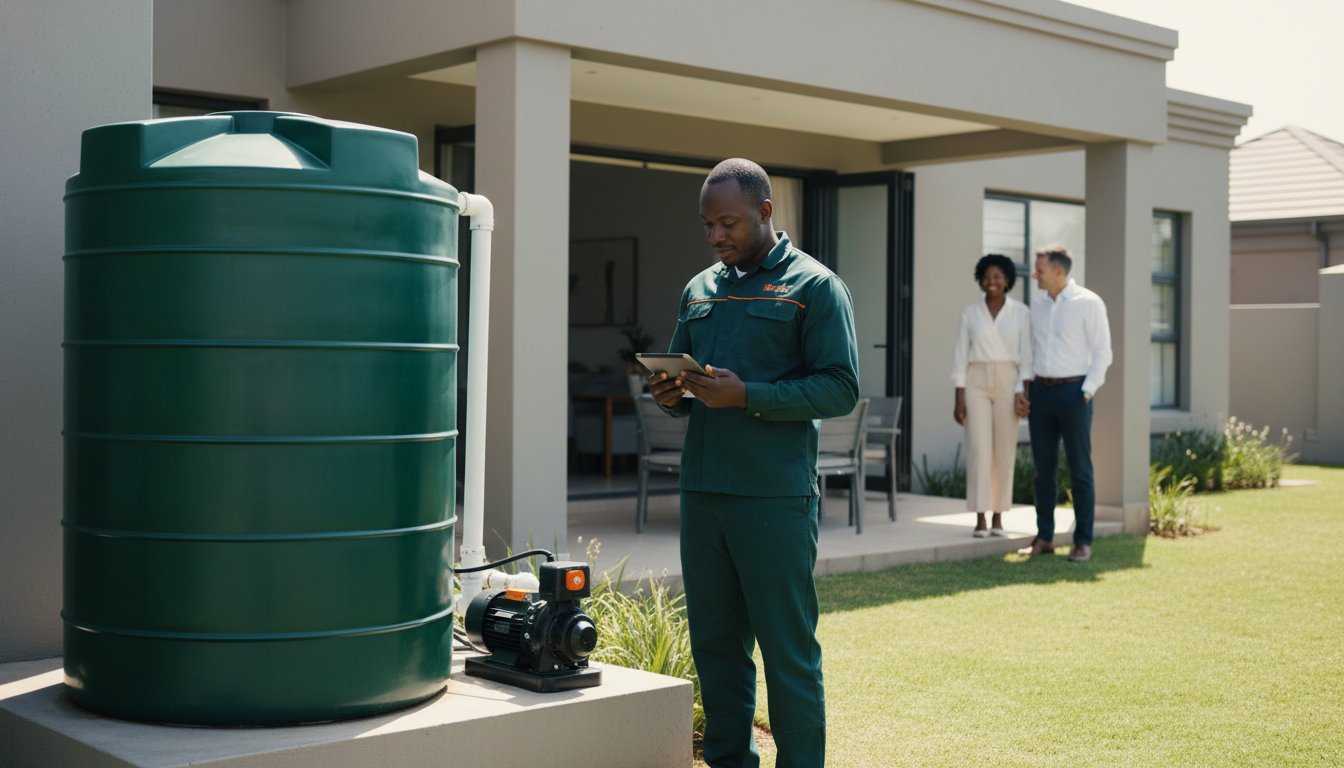
In the current climate of water restrictions and infrastructure challenges, a jojo tank installation offers more than just backup storage. These systems can act as a pressure buffer, providing a consistent flow to your home and protecting internal pipes from the harsh surges of the municipal grid. For residents in Sandton and Waterfall, a professional plumbing audit can identify hidden vulnerabilities before they become disasters. Our methodical approach focuses on long-term reliability rather than quick, temporary fixes.
Final Call to Action
We provide expert support across Sandton, Centurion, and Waterfall, offering 24/7 availability for genuine plumbing emergencies. When your home's foundation is at stake, choosing a team with nearly two decades of local experience is always better than opting for the cheapest quote. Protect your investment with a service that values accountability and precision. Book a Professional Leak Detection Survey Today and ensure your home remains dry and secure.
Secure Your Home’s Foundation Today
As we have explored, a water leak under floor Johannesburg properties encounter is a technical challenge that requires more than just a quick patch. By moving beyond traditional "dig and hope" methods and embracing surgical diagnostics, you protect your home from the structural risks posed by Gauteng's shifting landscape. Whether you are addressing an immediate burst or upgrading an aging system in Bryanston or Sandton, the focus must remain on long-term reliability and official compliance.
Apple Plumbing & Electrical is owner-managed by Garth Blair, who brings over 16 years of specialised industry experience to every project. Our team is PIRB Registered and COC Certified, ensuring that every repair meets the rigorous standards required by insurers and municipal regulations. With 24/7 emergency plumbing and electrical support, we are ready to respond when you need us most. Get Expert Leak Detection in Johannesburg Now and ensure your property remains a safe, dry, and structurally sound investment for years to come.
Frequently Asked Questions
How much does leak detection cost in Johannesburg?
Basic residential leak detection in Johannesburg typically starts at approximately R1,200 for a standard home. For larger properties or more complex layouts, the cost usually ranges from R1,800 to R3,500. Specialised methods like thermal imaging can add R700 to R1,200 to the base price, whilst acoustic detection or tracer gas services may incur additional fees of up to R1,500 depending on the equipment required.
Will my building insurance cover the cost of under-floor leak detection and repair?
Most South African building insurance policies include "Trace and Access" cover, which pays for the professional services used to find a water leak under floor Johannesburg properties might develop. While the insurance provider usually covers the cost of detection and the restoration of the floor, the actual pipe repair is often considered a maintenance item. You should always verify your specific policy wording regarding sub-surface leaks.
Can you find a leak under tiles without breaking them?
Yes, we use non-invasive technology specifically designed to locate leaks through tiles, screed, and concrete slabs. By employing acoustic microphones, thermal cameras, and tracer gas, we can pinpoint the failure without any initial demolition. We only remove a tile once we have verified the exact location of the burst, ensuring that the repair process is as surgical and clean as possible.
How long does it take to find a water leak under a concrete floor?
A professional leak detection survey typically takes between one and three hours to complete. The time required depends on the size of your home and the complexity of the plumbing system. Once we have isolated the suspected line, our advanced sensors work quickly to narrow down the source of the water loss to within the area of a single floor tile.
Is a damp patch on the floor always a pipe leak?
A damp patch is a strong indicator, but it isn't always caused by a burst pipe. It could be rising damp or groundwater entering the slab after heavy Gauteng summer rains. However, if the patch is accompanied by a warm spot on the floor or a spinning municipal water meter, it is almost certainly a pressurised pipe leak that requires immediate professional attention.
What should I do if my water bill suddenly doubles?
If your Joburg Water bill spikes unexpectedly, you should immediately perform a manual meter test. Turn off all taps and appliances, then check if the red dial on your municipal meter is still moving. If it is spinning whilst no water is being used inside the house, you have an active leak and should call a registered plumber to prevent structural damage.
Do you provide plumbing COCs after the repair is completed?
Yes, we issue a Plumbing Certificate of Compliance (COC) for all qualifying repairs and new installations. This document is your guarantee that the work was performed by a PIRB-registered professional and meets national safety standards. A COC is also a vital requirement for insurance claims and is essential when you decide to sell your property in the future.
Which areas in Johannesburg do you cover for emergency leak detection?
We provide comprehensive leak detection and emergency repair services across the northern and central suburbs of Johannesburg. Our primary service areas include Sandton, Centurion, and Waterfall. We also frequently assist homeowners in Bryanston, Rivonia, and Midstream who require urgent assistance with hidden water leaks, burst pipes, or unexplained water loss.